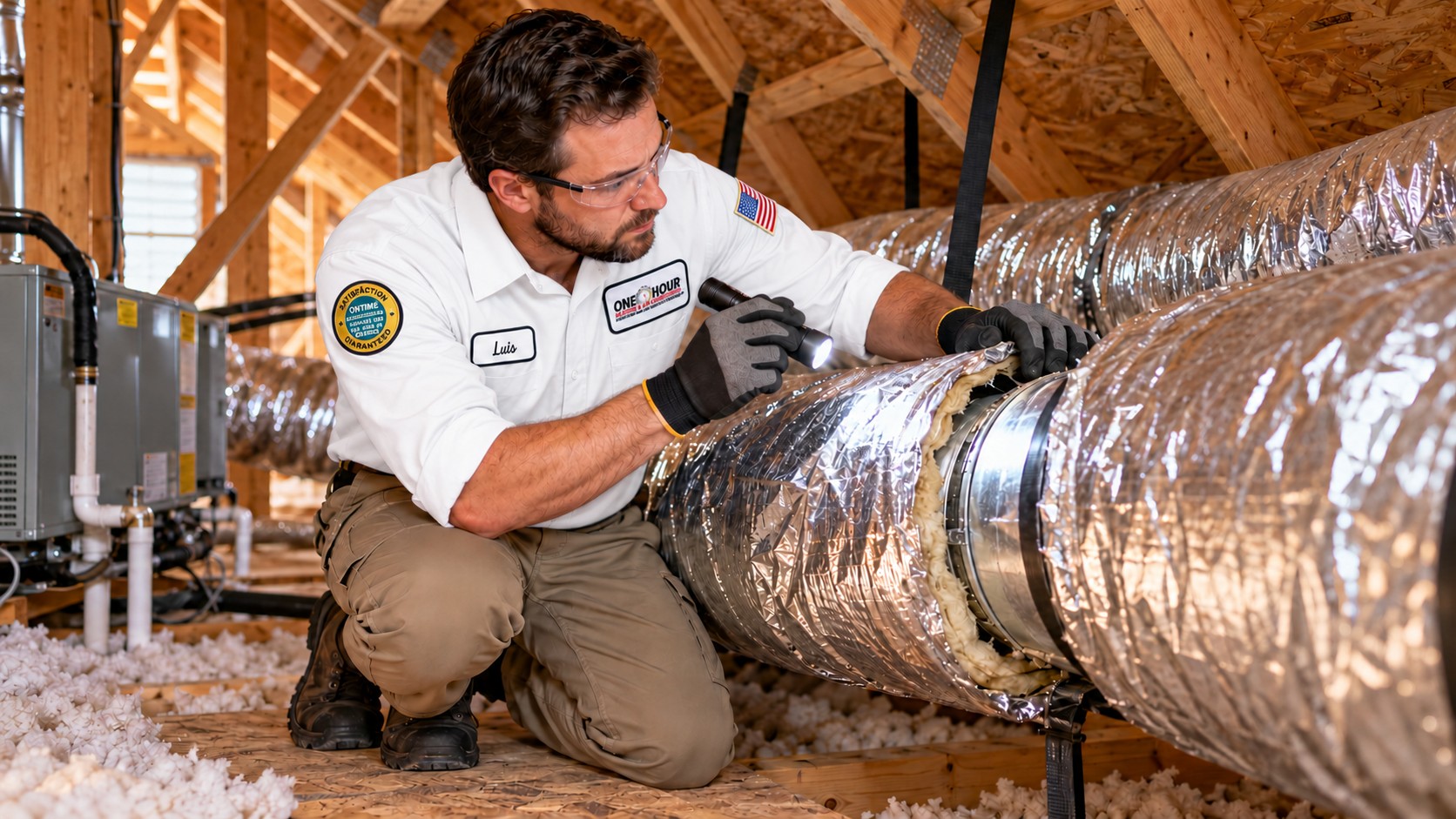
People spend up to 90% of their time indoors. So why settle for poor indoor air quality?
While poor indoor air quality can stem from several factors, one common and overlooked culprit is your HVAC system’s duct health. Leaky ducts affect your air quality and can also make your HVAC system work harder for longer. At One Hour, we’ll identify any duct issues and clean and seal your system to restore efficiency and air quality. All our technicians are licensed and insured, and we stand by an on-time guarantee, all factors that have helped establish us as the go-to HVAC contractor in the Clearwater, Florida area.
How Leaky Ductwork Develops Over Time
From aging materials to normal wear and tear, leaky air ducts often develop over time. Complicating matters, ductwork is usually hidden within walls and in hard-to-reach spaces, so problems can be difficult to spot. Here’s a closer look at the reasons why leaky ducts develop:
Aging Materials and Deteriorating Seals
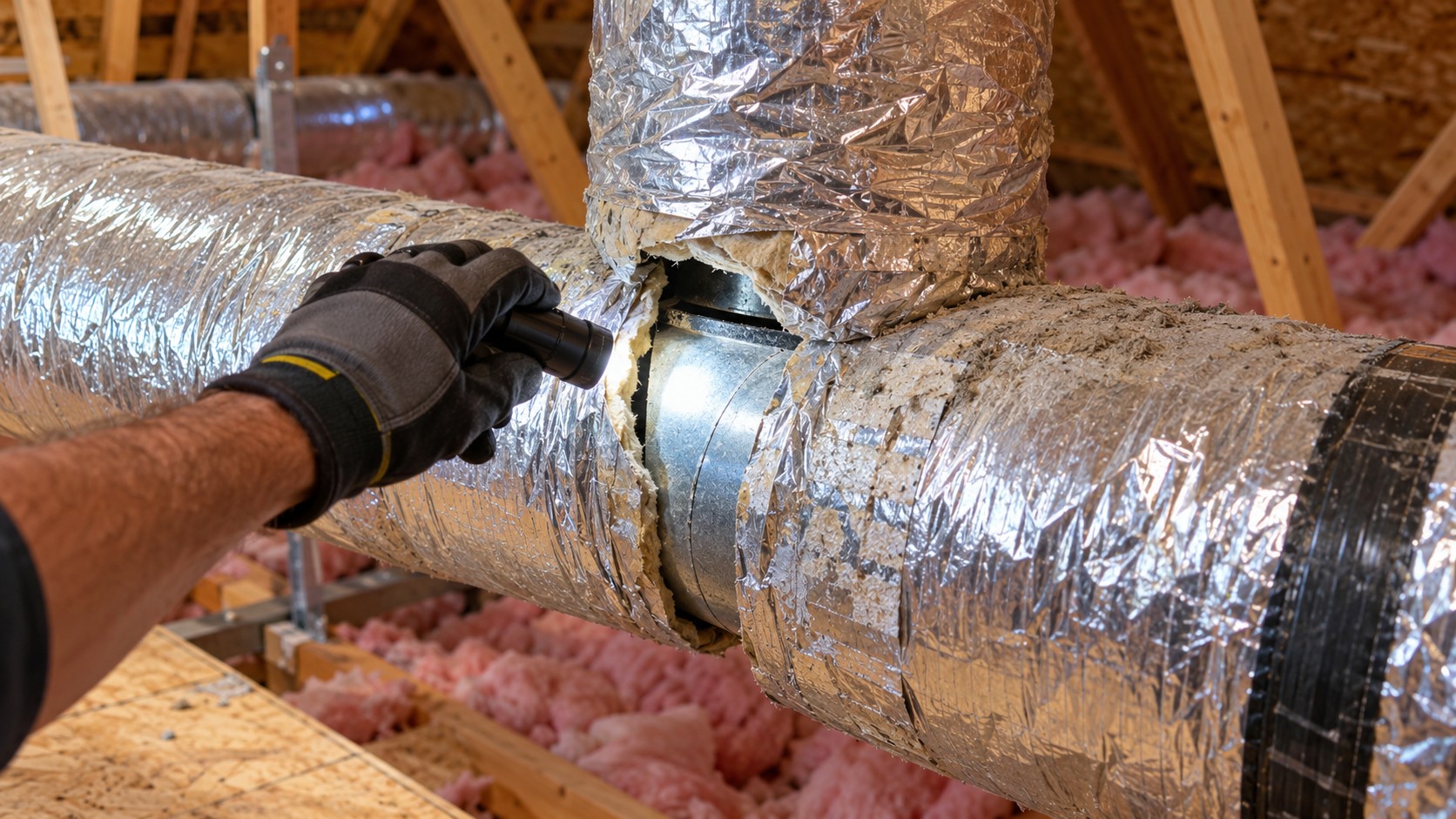
Ducts naturally deteriorate over time because of thermal stress, adhesive degradation, movement and other factors. These factors often cause ductwork to pull apart and seals to break down, creating air leaks that allow conditioned air to escape.
Poor Initial Installation
Poor installation is another key reason for leaky ductwork. Unqualified HVAC contractors often skip important steps, which may result in unsealed joints, poor ductwork sizing or bad connections. Installation issues can also be hard to diagnose because ductwork is often hidden after installation.
Pest Damage and Physical Wear
Ducts offer a dark, quiet and climate-controlled area, making them prime real estate for pests. When pests settle or nest in your ducts, they can do more than just damage your ductwork; they can release allergenic particles into the air and create foul odors.
Signs of Leaky Ductwork in Your Home
Leaky ductwork can be difficult to identify because it’s often hidden in walls, attics and other hard-to-reach and hard-to-see areas. However, there are still ways to identify problems. Signs of leaky ductwork to watch for include:
Uneven Temperatures Between Rooms
Leaks in the ductwork can cause conditioned air to escape before it reaches certain rooms. If you notice uneven temperatures from room to room, it could be a sign of a problem. Some things to look for include:
- Rooms that run consistently hotter or cooler than others when the HVAC system is on.
- Weak airflow coming from certain vents throughout the home.
- If temperature imbalance continues seasonally.
Higher Than Expected Energy Bills
If your ducts are leaking, your HVAC system has to work harder to replace lost air. This directly translates to higher overall energy bills. If you suspect your ducts are leaking, compare your energy bills to previous months or the same period last year. If there’s a significant difference, it could confirm your suspicion.
Excess Dust and Allergens Throughout the Home
Leaky ducts don’t just lose conditioned air; they also pull unfiltered air into the system, often from unconditioned spaces like attics and crawlspaces. This often results in excessive dust accumulation, more allergens circulating throughout the home and more intense allergic reactions for allergen-sensitive residents. Leaky ducts can also soil your HVAC air filter faster than normal by capturing more dust and debris as it filters through the system.
Unusual Odors or Whistling Sounds Near Vents
The final signs to watch for that can indicate leaky ducts are foul smells and strange sounds coming from your vents or duct connections. Musty or stale odors from the vents, or whistling and hissing sounds from vents or duct connections, are signs of a leak somewhere in the system. If you can pinpoint the odors and noise, you can help the technician locate the leak faster.
How Ducts Affect HVAC Efficiency
Gaps, loose joints, poor connections or other duct issues can result in up to a 40% loss of conditioned air. This means that your HVAC system may have to work 40% harder to offset these losses to deliver the desired hot or cool air in your Clearwater, Florida, home. The longer your HVAC system runs, the more wear and tear is placed on the unit and its various components, like the motor and heat exchanger. Beyond higher energy bills, uneven temperatures between rooms, and excessive dust buildup, leaky ducts can also lead to more HVAC issues and repair costs you have to manage.
The Connection Between Leaky Ducts and Indoor Air Quality
Leaky ducts can take a toll on your HVAC system and increase your utility bills. They can also impact your health. If ducts are leaking in unconditioned spaces like attics and crawlspaces, they’ll pull in dust, insulation particles and other allergens that will then circulate unfiltered through the ductwork and disperse into your home. It can result in more intense allergic reactions, worsening asthma, skin irritation and other health problems.
Benefits of Duct Cleaning and Sealing
Leaky ductwork impacts your property and the health of its residents in several ways, underscoring the importance of addressing issues as soon as you notice them. Benefits of air duct cleaning and sealing include:
- Lower energy bills
- More consistent room-to-room comfort
- Improved airflow from vents
- Reduced HVAC system strain
- Better overall indoor air quality
- Cleaner living spaces
Leaky Ducts and Indoor Air Quality FAQs
How do leaky ducts affect indoor air quality?
Leaky ducts can pull unfiltered contaminants from unconditioned spaces into the duct system and disperse them throughout your home. The contaminants may include dust, pollen, pet dander, mold spores and more.
What are the signs of leaky ductwork in my home?
Common signs of leaky ducts include poor airflow, musty smells, higher energy bills, and uneven heating or cooling.
Can duct cleaning improve allergy symptoms?
Duct cleaning can help remove dust, debris, pet dander and other particles from the duct system and improve allergy symptoms. However, ducts should also be properly sealed after cleaning to fully resolve leaks and prevent problems from recurring.
How much energy is lost through leaky ducts?
A standard home can lose up to 40% of conditioned air due to leaks, holes or other issues with the ductwork. This can add hundreds of dollars a year in utility costs.
How often should ductwork be inspected or sealed?
Best practice is to inspect ductwork at least once every 2-3 years and reseal every 3-5 years.
Is duct cleaning enough, or do leaks need to be sealed too?
Duct cleaning won’t be enough if you don’t also address leaks and holes in the ductwork. While duct cleaning can remove contaminants from the system, persistent holes or leaks create a point of re-entry.
Breathe Easier with Healthy Ductwork
If you think your home has leaky ducts, contact us today to schedule a duct inspection in Clearwater, Florida, with one of our licensed professionals. The benefits of duct cleaning and sealing include improved indoor air quality, decreased energy bills and protection for your HVAC system. Contact us today to learn more and to create a healthier, more efficient household.