 Because it seldom experiences severe, prolonged winters like many other states, very few homes in Florida have a furnace. But for homes that do, they play a crucial role in their heating, ventilation, and air conditioning (HVAC) systems.
Understanding the Role of a Furnace in an HVAC System
The primary role of a furnace is to generate and distribute heat by drawing in cold air, heating it via a fuel source, such as natural gas, propane, or electricity, and then using its built-in blower motor to push the warmed air through the HVAC system’s ductwork.
Together, the furnace’s blower motor and the HVAC’s ductwork, a network of metal or flexible pipes, allow warm air to circulate throughout a home. Of course, all of this can come to a grinding halt if the furnace stops working. Failing to schedule routine tune-ups as recommended is a sure-fire way to cause something like this to happen.
Why Furnace Tune-Ups Are a Must
Furnace tune-ups are considered mission-critical for several reasons. When homeowners don’t have their furnace serviced, they run the risk of higher energy bills due to decreased efficiency. Frequent, expensive breakdowns and a significantly shorter lifespan are also consequences of not regularly servicing a furnace.
A lack of routine furnace maintenance can also pose a health hazard to a home’s occupants. A poorly functioning furnace can negatively affect indoor air quality, expose a home’s occupants to carbon monoxide, and increase the risk of fire.
What Does a Furnace Tune-Up Include?
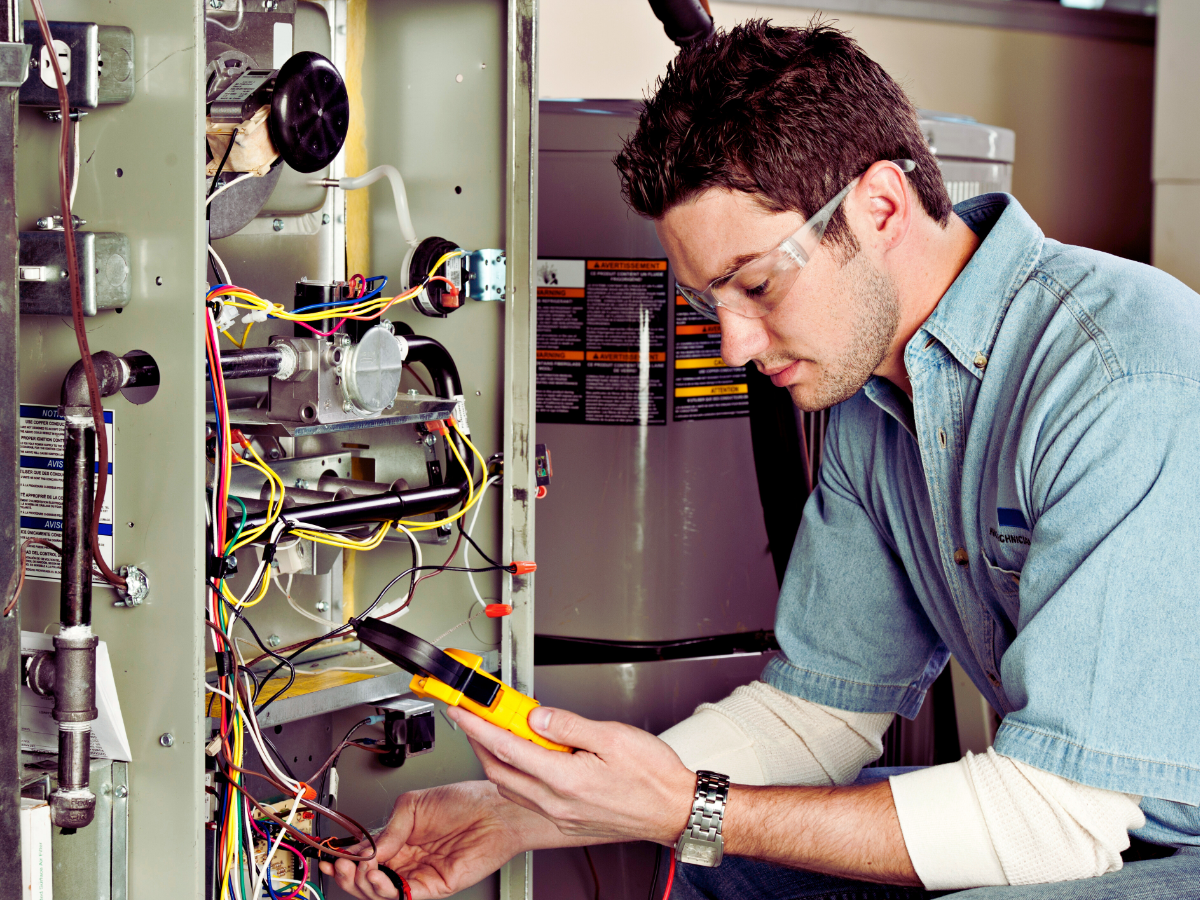 Routine tune-ups performed by a licensed HVAC technician can go a long way toward protecting the moving parts of a furnace against the damaging effects of wear and tear. They also ensure it continues to operate safely and effectively.
To appreciate how and to what extent, we need to know a little more about what a furnace tune-up entails. According to most HVAC technicians, a comprehensive furnace tune-up, which takes about 1 to 2 hours to complete, should include the following:
- Cleaning the blower compartment – This part of a furnace tune-up involves an HVAC technician removing dust and debris from the entire blower compartment. That includes burners and the heat exchanger, all of which are critical components of a furnace’s heating system. Blower compartment cleaning improves airflow, efficiency, and prevents premature wear and tear.
- Wiring inspection and adjustment – This aspect of a furnace tune-up involves an HVAC technician tightening wires and checking connections, both of which can help prevent malfunctions, such as intermittent operation and component failure, and the need for costly repairs. Checking safety controls and switches to ensure they are functioning properly is also part of a wiring inspection and adjustment.
- Furnace burner inspection and adjustment – This aspect of a furnace tune-up is arguably the most important. It involves an HVAC technician cleaning and adjusting a furnace’s burners and cleaning its flame sensor, both of which can improve efficiency, prevent carbon monoxide leaks, and reduce the risk of fire.
- Heat exchanger, gas pressure, and flame operation inspection – This part of a comprehensive furnace tune-up involves an HVAC technician checking, cleaning, and adjusting these critical components of the furnace. And that’s because it ensures the entire system continues to operate safely, efficiently, reliably, and predictably.
- Cleaning or replacing air filters – This aspect of a furnace tune-up involves cleaning or replacing the furnace’s air filter, which can help improve indoor air quality, energy efficiency, and extend the lifespan of the HVAC system.
- Checking airflow and duct connections – This part of a furnace tune-up involves an HVAC technician checking duct connections and airflow to ensure air can move through the system and home unrestricted.
- Inspecting the igniter or pilot light – The primary objective of this furnace tune-up is to make sure the igniter or pilot light, depending on the type of furnace in the home, is functioning correctly. A problem with either of these can lead to gas buildup, which, in turn, increases the risk of fire or explosion.
Another art of thoroughly tuning up a furnace entails an HVAC technician lubricating bearings, belts, and other moving parts, which reduces friction, minimizes wear and tear, and reduces noise. They will also calibrate the thermostat for accurate temperature and perform gas and flame adjustments as needed.
How Often Should Homeowners Schedule a Professional Furnace Tune-Up?
 Most HVAC technicians agree that it is best to schedule annual furnace tune-ups to keep it and the home’s HVAC system in good working order.
They also recommend scheduling these all-important tune-ups during the Fall months to ensure they are ready to handle the increased demand before colder months roll in.
DIY Furnace Maintenance Tasks
While it is always best to leave the heavy lifting to professional HVAC technicians, there are a few DIY maintenance tasks that homeowners can do to keep their furnace in good working order. Some of these include the following:
- Cleaning the furnace’s blower area with a shop vac or compressed air
- Cleaning vents and registers
- Periodically testing the thermostat and replacing batteries if needed
- Replacing air filters every 1 to 3 months
Is a Tune-Up Worth It for a New Furnace?
 Even if you have a new furnace, it is a good idea to schedule routine tune-ups with a licensed HVAC technician. Doing so ensures it will run efficiently, which can help keep energy costs low. It also maintains the manufacturer’s warranty and goes a long way toward preventing costly breakdowns.
New furnaces can sometimes cause problems due to poor installation, manufacturing defects, or faulty components, such as control boards, capacitors, and igniters. The faster minor issues are identified and fixed on a new furnace, the less likely they are to become bigger issues later on.
Hire a Clearwater HVAC Technician Today
To summarize, furnaces play a crucial role in heating the air in some Florida homes. Routine tune-ups can keep them operating efficiently, increase their lifespan, and contribute to maintaining or improving a home’s indoor air quality. To learn more or to schedule a service call, speak with a Clearwater One Hour Air Conditioning & Heating associate today.