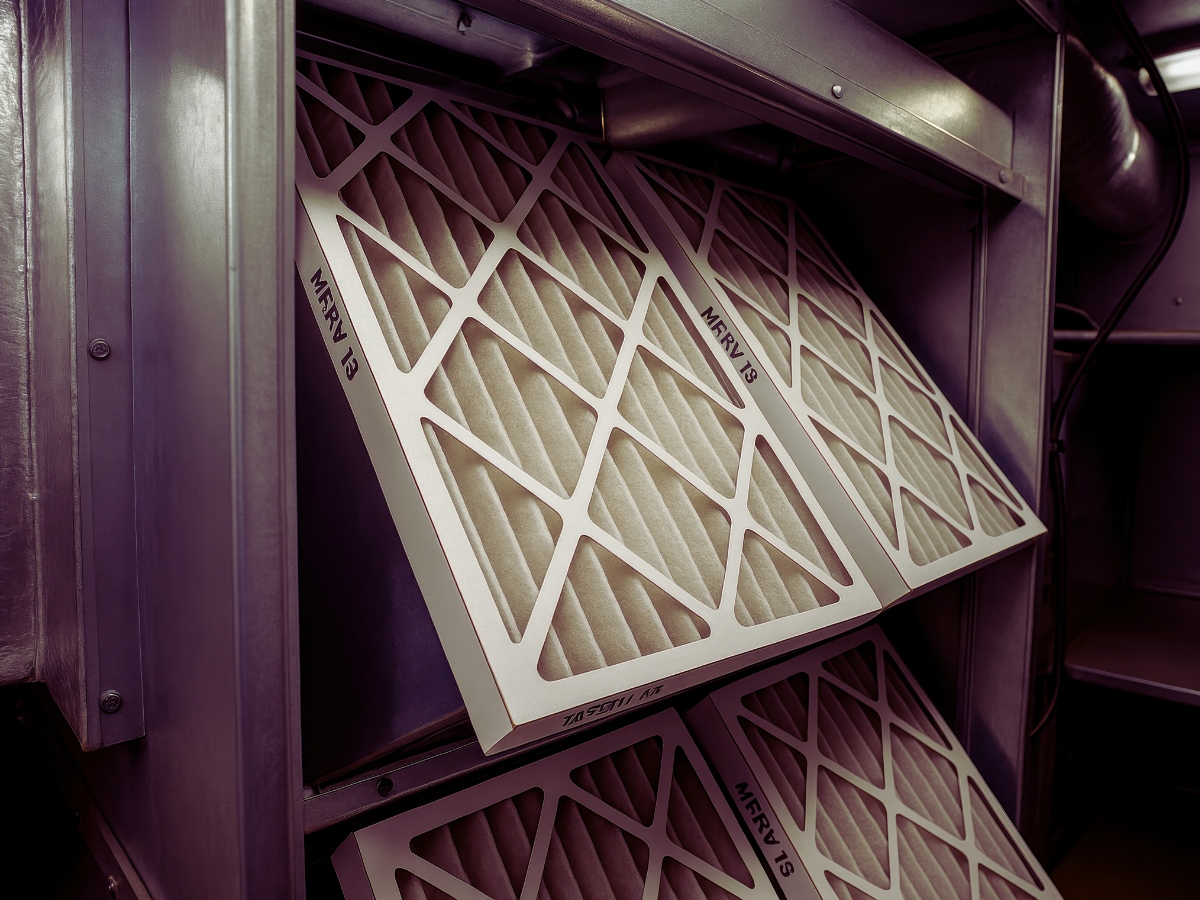
 Your home’s indoor air quality affects everything from sleep quality and risk of infections to respiratory and cardiovascular conditions and more. Standard air filters remove dust mites, carpet fibers, pollen, pet dander, and other small particles, but they aren’t a catch-all solution. HEPA air filters trap a significantly larger number of even microscopic particles to dramatically improve indoor air quality.
Quick Takeaways
- A HEPA filter has a unique design that allows it to trap tiny air particles through the processes of diffusion, interception, and impaction.
- A MERV rating indicates how effective the air filter is at removing different sizes of particles from the air.
- HEPA filters remove all of the particles that lesser-grade filters remove as well as viruses and carbon dust.
How a HEPA Filter Works to Capture Particles
Generally, your home’s HVAC system pulls indoor air through a return air duct and through the air filter. A HEPA filter stands apart from other types of air filters in its design.
This type of filter is made with a dense, fibrous material that is pleated. The pleats create more surface area, so more debris is captured.
In addition, the fibers in the filtration material are arranged non-uniformly. HEPA filters are also considerably larger and thicker, so the air must pass through substantially more fibrous material. The design allows HEPA filters to capture tinier particles.
HEPA air filters use three mechanisms to deliver superior filtration results, and these are diffusion, interception, and impaction. The dense mesh fiber causes tiny gas particles to bump into each other, and this increases the amount of time it takes for the air to pass through the filter. This diffusion enables the HEPA filter to enhance the interception and impaction functions.
With interception, the tiny particles in the air stick to the air filter’s fibers. Impaction is the process of those particles embedding into the fibers, which prevents them from being dislodged due to continued airflow.
What Types of Contaminants HEPA Filters Remove
HEPA filters capture the smallest elements, such as carbon dust from cooking and illness-causing viruses. It also captures all of the larger particles that lower-grade air filters also remove from the air. Some of these are bacteria, lead dust, household cleaning sprays, dust mites, auto fumes, carpet fiber, smoke, and others.
HEPA vs. Standard Air Filters — What’s the Difference?
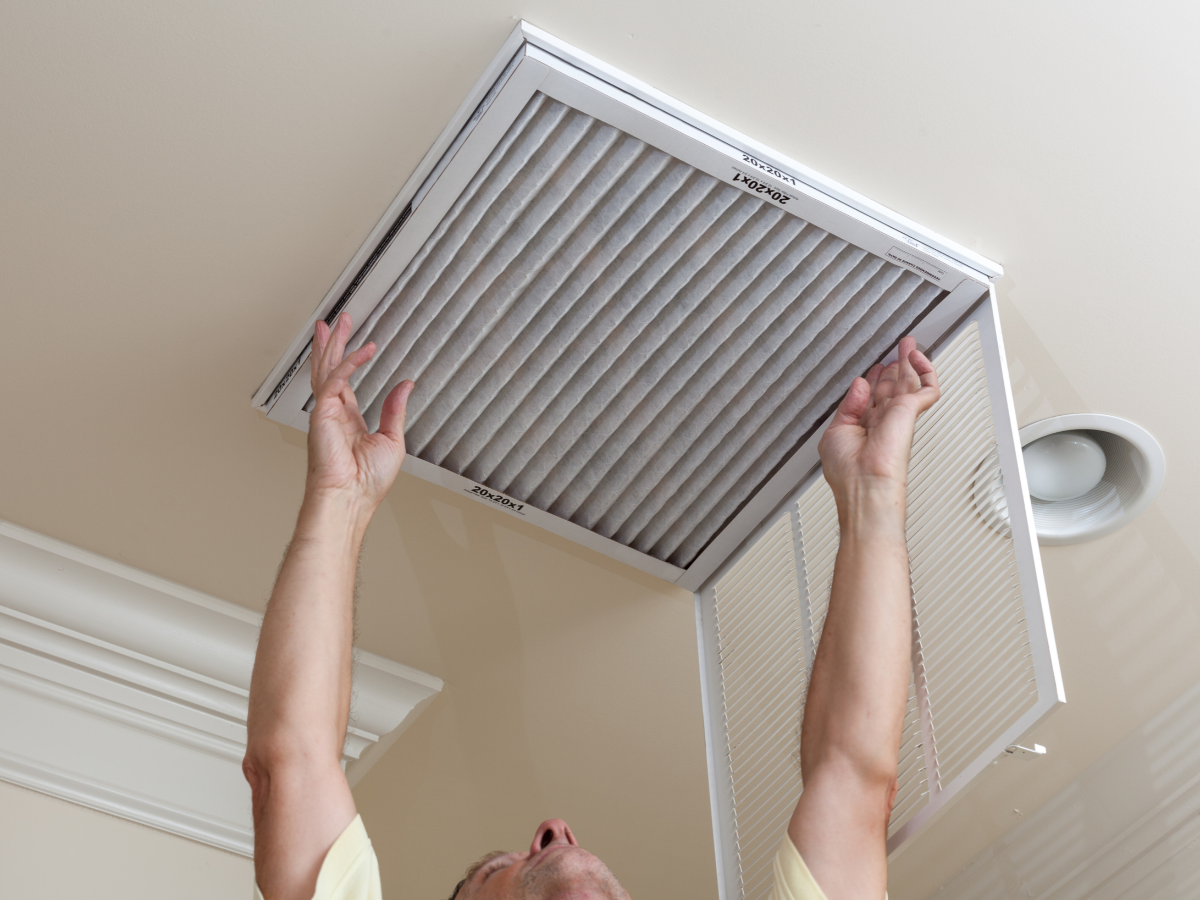 A standard air filter is made with a relatively thin, flat sheet of fibrous material to remove particles. These filters include fiberglass and aluminum mesh filters, disposable filters, home box filters, and commercial filters. The standard home box filter only removes between 70% and 85% of particles that are three to 10 microns in size.
The unique design of HEPA air filters makes them far more effective at filtering out more of the smaller and larger particles alike. In fact, it can remove up to 99% of air particles between 0.1 and 10 microns. This makes HEPA air filters the most effective type on the market.
Where HEPA Filters Are Used and Why It Matters
HEPA filters are commonly used in both home and commercial HVAC systems. They are also used to enhance the performance of vacuums and stand-alone air filtration systems. Because of how effective they are at trapping small particles, HEPA filters are used in hospitals and medical settings as well as in food processing and manufacturing facilities.
In both residential and commercial settings, even the smallest particles can cause illness, contaminate food, impact the life and performance of appliances and electronics, and more. As a result, the use of HEPA filters in a variety of settings as well as in different products is essential.
How to Choose the Right HEPA Filter for Your Needs
When you purchase an air filter, you’ll notice a MERV rating on the packaging. MERV stands for Minimum Efficiency Reporting Value, which describes how effective the filter is at trapping different sized particles.
Standard air filters have a rating between MERV 8 and MERV 16. A higher rating means that the filter can trap smaller particles more effectively.
A MERV 8 filter, for example, traps less than 20% of particles that are one to three microns. A MERV 16 filter, traps 95% of these particles but only 90% of particles between three and 10 microns.
A HEPA filter has a MERV rating between 17 and 20. All HEPA filters trap 99% of particles between one and 10 microns. The difference in the ratings is based on the ability to trap the tiniest particles that are between .3 and one micron.
A MERV 17 rating indicates that 99.97% of these particles are trapped. A MERV 20 means that 99.99997% of these small particles are removed from the air.
FAQs
 How long does a HEPA filter last?
HEPA filters last longer than standard filters, but their longevity varies by manufacturer and product. Overall, the manufacturer’s recommendation may be to replace the filter between six months and five years.
What is a “true” HEPA filter?
A “true” HEPA filter is proven to meet official standards for maximum filtration. You might also see verbiage like “HEPA-like” or “HEPA-type” on packaging. These filters don’t meet the same high standards as “true” HEPA filters and could be less effective.
Are HEPA filters good for people who have allergies and asthma?
Yes, HEPA filters are more effective at removing particles that trigger allergic and asthmatic responses, such as dust mites, dust, pollen, dander, and more.
Improve Your Indoor Air Quality with One Hour Clearwater, FL
The quality of the air you breathe impacts your immediate well-being as well as your long-term health. If you’re concerned about indoor air quality, our team at One Hour Clearwater can help you select a filtration and purification system that suits your home’s needs and your budget.
Give us a call today to schedule a consultation. We’re always on time or you don’t pay a dime.