 A heat pump is a great way to heat or cool your home because the unit transfers heat from one location to another, without actually generating it. Does it also improve your indoor air quality? Absolutely.
When heat pumps filter out dust and allergens, balance humidity, and circulate fresh air, they are also boosting your indoor air quality (IAQ).
However, their effectiveness does depend on the quality of your filter, the condition of your ducts, and how frequently you schedule maintenance.
This article explores how heat pumps improve indoor air quality, the features that help them, and how to choose the right heat pump for your needs.
How Heat Pumps Affect Indoor Air Quality
By filtering and circulating air in your home, heat pumps can control humidity and reduce allergens, dust, and mold growth. How?
- Continuous air circulation ensures cleaner air
- The unit controls humidity in both heating and cooling modes
- The unit filters out dust, pollen, and other particulates
Features That Help Heat Pumps Improve Air Quality
Heat pumps have multiple components that contribute to improving the air quality in your home.
Built-In Filtration
Heat pumps have built-in filtration that traps pollutants, pollen, mold spores, and bacteria. The effectiveness of the filtration depends, of course, on what type of filter you’re using. The types of filters include:
- Standard filters: These have a MERV (Minimum Efficiency Reporting Value) rating of 1-4.
- High-MERV filters: These filters have a MERV rating of 8-16.
- HEPA-compatible filters: These filters have a MERV rating of 17-20.
Any time you upgrade your filter, from standard to high-MERV filters or high-MERV to HEPA-compatible filters, you’re significantly increasing the number of pollutants that are removed from your home.
There are drawbacks, though. A higher-rated filter can strain your HVAC system, making the blower motor work harder and ultimately increasing your energy bills.
Humidity Control
Surprisingly, heat pumps do an excellent job of controlling humidity in both summer and winter. During the summer, warm air passes over the heat pump’s cold coil, causing it to condense into water droplets.
These droplets are drained away from the system, leaving cooler, less humid air. In the winter, heat pumps prevent your air from becoming too dry by balancing the moisture in the air.
You should always aim for balanced humidity as it offers several benefits:
- Improves air comfort and health by prohibiting mold growth
- Reduces dust mites in the home
- Alleviates respiratory conditions
- Preserves wood furnishings.
Ventilation Support
Some heat pump systems integrate Energy Recovery Ventilators (ERVs) or Heat Recovery Ventilators (HRVs), which replace stale indoor air with fresh, outdoor air. This process improves whole-home circulation and reduces the amount of stale air in your home.
Continuous Operation
If you have a variable-speed heat pump, it will run for longer at lower speeds, ensuring a constant turnover of air. This, inevitably, keeps pollutants and particulates moving through the filters.
In comparison, stop-start furnace and AC systems tend to cycle on and off more frequently, which doesn’t provide this constant air turnover in your home.
Limitations — What Heat Pumps Can’t Handle Alone
While heat pumps have many benefits when it comes to heating or cooling your home, they do have limitations when it comes to improving indoor air quality. Heat pumps can’t filter out the following:
- VOCs and chemical pollutants, such as paint or cleaning products
- Gases like radon and carbon monoxide
- Ultrafine particles that pass through even high-MERV filters
- Mold problems that are due to underlying moisture issues in your home, like mold behind your walls
Maintenance Practices That Boost Air Quality
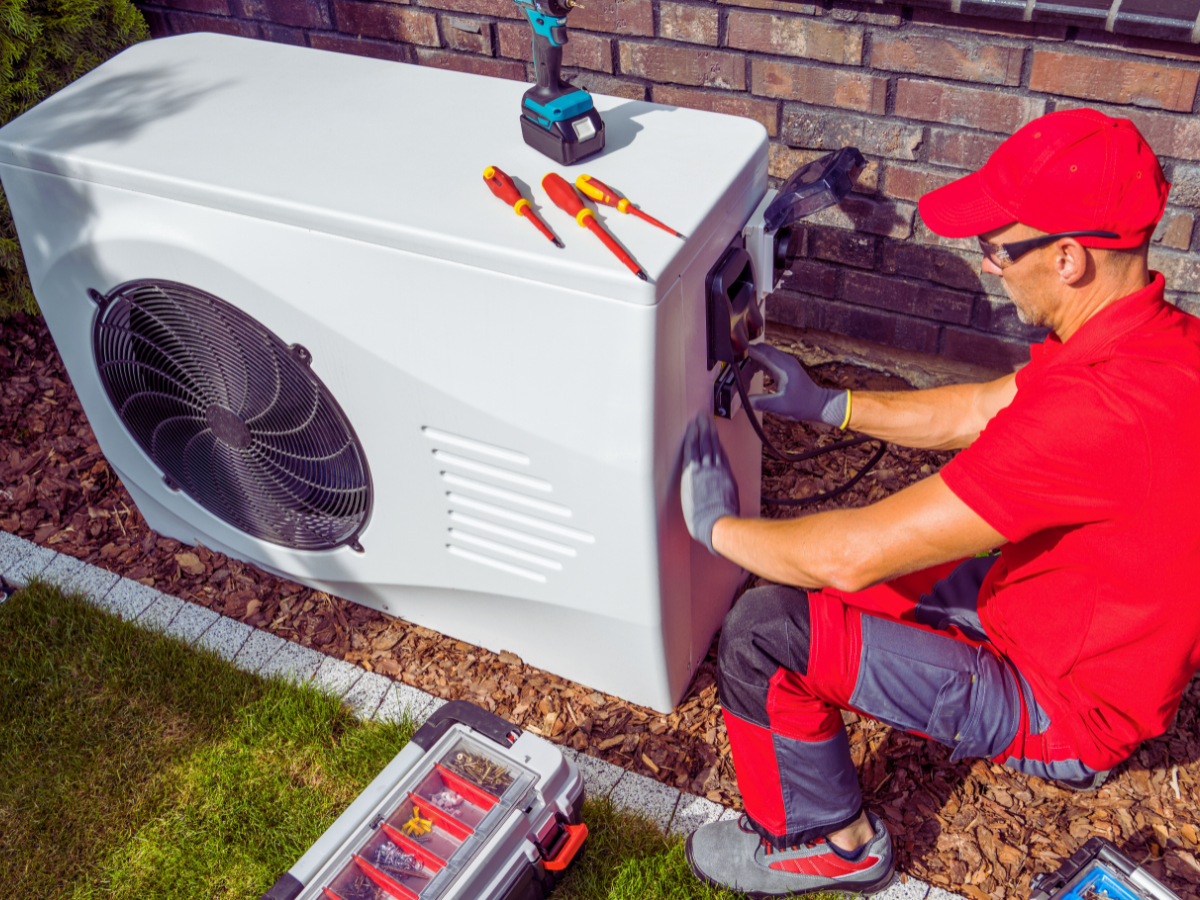 Heat pumps can do quite a bit to boost the quality of your indoor air. However, there are maintenance steps you can take to help your system.
- Replace your filters every 1-3 months
- Clean your ducts
- Ensure your ducts are sealed to prevent air escaping
- Keep your outdoor unit clean
- Schedule professional tune-ups with our professional technicians in Clearwater, FL
Signs Your Heat Pump Isn’t Helping IAQ
An efficient heat pump should do a good job of improving the IAQ in your home. However, if your system isn’t running as it should, you’ll notice these signs.
- Persistent dust everywhere
- Allergens, like dust and pollen, indoors
- Musty smells or moldy odors
- Home is too dry or too humid
- Dust buildup on your vents despite frequent filter changes
Choosing the Right Heat Pump for Better Air Quality
To further improve the air quality in your home, follow these steps:
- Select high-efficiency filtration. We recommend anything higher than a MERV 13 rating.
- Integrate a smart thermostat with IAQ sensors so the thermostat can alert you when your IAQ drops.
- Consider add-ons, such as UV lights, HEPA filters, and ERV or HRV systems. UV lights can inactivate airborne microorganisms, HEPA filters can filter out very small particles, and ERV/HRV systems replace stale, indoor air with fresh, outdoor air.
Heat Pumps vs Other IAQ Solutions
While a heat pump provides heating, cooling, and air filtration, it isn’t a dedicated IAQ system. For fresher, cleaner air, consider pairing these IAQ solutions with your heat pump.
- Portable air purifier: Filters and purifies the air in a single room.
- Humidifier: Adds moisture to the air in areas where the indoor air is excessively dry.
- Dehumidifier: Removes excess moisture from the air to prevent mold or mildew growth.
Although a heat pump can be sufficient with humidity control and air filtration, it does have its limitations. You may need an additional standalone IAQ unit in these scenarios:
- Air purifier: You live in an area with high outdoor pollution, or family members have respiratory issues and/or allergies.
- Humidifier: You live in a region with a very dry climate, and your heat pump doesn’t fully address this issue.
- Dehumidifier: You live in a region with high humidity levels, even during mild weather when the heat pump doesn’t need to run.
When you choose additional IAQ equipment, it’s important to carry out a cost-benefit analysis to determine if an add-on is worth it.
- Do you want a portable or whole-house unit?
- What will be the operating costs per month?
- What are the maintenance requirements?
Frequently Asked Questions (FAQ)
Do all heat pumps improve indoor air quality, or only certain types?
All heat pumps improve indoor air quality to a certain degree (like controlling humidity levels), but certain types improve indoor air quality more than others. Air-to-air heat pumps filter out the contaminants and pollutants in your home, whereas air-to-water systems do not.
Can a heat pump remove smoke or odors?
A heat pump can filter out some airborne particulates, but to effectively filter out smoke or odors, you will need a dedicated filtration add-on, such as an air purifier or UV light. Upgrading your standard filter to a high-MERV filter can help remove some smoke particles.
Do I still need an air purifier with a heat pump?
It depends on the quality of the air in your local area and your family’s health needs. In most cases, a heat pump provides sufficient air filtration. However, if your region has high levels of outdoor pollution and you have a family member who has allergies or a respiratory illness, you may need a separate air purifier.
How often should I replace filters?
You should replace filters every 1-3 months, depending on the type of filter you have and the number of pollutants in your home. If you have pets, consider replacing your filter every month, for instance.
Does a heat pump help with mold prevention?
Yes, a heat pump can help prevent mold by controlling indoor humidity. As warm, humid air passes over the system’s cold coil, it condenses into droplets. These droplets then drain out of the system, leaving your home less humid and making it less likely for mold to grow.
Turn to the Experts in Clearwater, FL
 Besides heating and cooling your home, heat pumps improve IAQ with filtration, humidity, and air circulation. However, they do have some limitations. Heat pumps can’t filter out gases, VOCs, or radon. To filter these out, you will need dedicated IAQ solutions.
Need services for your heat pump? Our technicians at Clearwater One Hour Air Conditioning & Heating provide professional maintenance, repair, and installation services in Clearwater, FL, and the surrounding areas.
You’ll get experienced technicians and expertise on every job. We also have an unwavering commitment to prompt services. In fact, we’re always on time or you don’t pay a dime.
Contact our team today to see how we can help!